
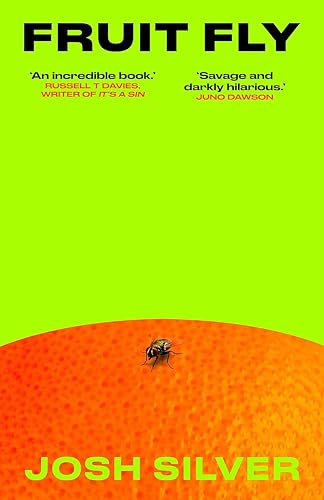
Mallory’s debut novel was a massive success, but seven years of writer’s block have taken their toll and she’s desperate for a fresh story to tell. In an attempt to escape the crushing hold of her life, Mallory has a chance encounter with Leo, a young gay man in the throes of addiction. Inspired by his gritty, tragic circumstances, Mallory starts writing a new book, inserting herself further into the narrative and into Leo’s life. Why shouldn’t she be the one to tell his story?
It’s kind of difficult to review this book because I objectively think it’s great and super well done, but it was also a pretty thoroughly unpleasant reading experience. I picked it up the way I pick up many books which means that I read the blurb ~6 months ago, spent those six months with the premise slightly shifting in my head, and then starting it without refreshing myself on what it’s actually supposed to be about so I was expecting something a little more like American Fiction/Erasure. Let me warn you now: This book is not a comedy.
So let me first explain why I think this book is great and then we’ll talk about the reading experience. I instantly hated Mallory, which I think is intentional. She is not only kind of a bored housewife type, but she starts trying to write this book about queer life experiences while being genuinely *skin-crawlingly* ignorant. When she was messaging men on Grindr I was actually actively trying to escape my body, it went beyond cringe into another realm. What I like about how Josh Silver writes Mallory is that we figure out pretty quick that Mallory’s life is genuinely pretty awful. Through learning about the abuse she suffers in her marriage and her relationship with her mother, the reader comes to understand why Mallory is so desperate for escape and also a bit of why she is able to convince herself that she’s in the right while being so incredibly selfish, entitled, and invasive. Despite that, the narrative does not redeem Mallory. She is really the villain, and I think that’s a good idea to sit with—that someone can be struggling with trauma and abuse and still just be a pretty terrible person. I also don’t think Leo is really situated as the hero. He is in some ways a victim of his circumstances and you can extend empathy to him, but I don’t think he’s supposed to be particularly likable or morally-upright. I like these grey areas, and they make the book feel genuinely fresh and surprising in a way I really appreciated.
Even as a lover of sad gay books, I think Fruit Fly is making a good point of exploring why sad gay books seem to have mainstream appeal in a way that happy gay books don’t. There are layers to this, and frankly we don’t have time to unpack all of that. Briefly, personally I like sad gay books because 1. I am gay and often sad and thus they are pretty relatable and 2. I like sad books and I like gay books separately and thus I like where those things intersect. When it comes to the broader mainstream, I think there is an extent to which the cishet public views being queer as this inherently tragic thing, a lot like how they view disability honestly. It’s hard to explain to able-bodied people without chronic illnesses that my conditions are not something I ‘suffer’ from or a form of adversity to be overcome. They’re just a part of me and always have been. Saying that I suffer from or have to overcome my condition…it’s like saying I suffer from having fingernails or something. That’s just how it is and how I’ve always been. Similarly, I think being queer is viewed as a source of suffering by people who aren’t queer. The thing about that is that there is nothing inherently difficult or tragic about being queer, the suffering comes from bigotry. I. e. I don’t suffer because I’m trans. I suffer because people are transphobic. Because cishet people view being queer as inherently tragic, they perceive tragic stories about queer people as being somehow more authentic than happy ones, and people want stories that they perceive to be authentic, especially when it reinforces their worldview that being cishet is the default.
You get the point, there’s a lot there. Back to the book, I also just loved the ending. It’s exactly the type of ending that I love: dramatic, satisfying, and a little ambiguous.
Okay, now for the reason it took me longer than usual to get through this book. This book is really dark, which I’m all for. The thing is that I usually don’t get ‘triggered’ by disturbing content in books, even content that reflects my own bad experiences / trauma. I don’t know what it is about Fruit Fly, but I was deeply unsettled by some of the topics included, even by things I have not experienced and I would not consider potential triggers for me. Additionally, as mentioned above there really are not any super likable characters in this. I liked that, but that in combination with just some really dark moments meant I kept putting this put down and struggling to pick it back up. I’m glad I did, because I liked it a lot, but you wouldn’t know that based on the way I went about reading it. TLDR: Proceed with caution with this book, because it’s a lot.
I’ve had my eye on some of Josh Silver’s YA books for a while but considering I don’t read a ton of YA anymore I’m really glad he’s venturing into Adult fiction. I hope he keeps it up, because I’ll have my eye out!
Thank you to Josh Silver and Crooked Lane books for this ARC in exchange for my full, honest review!
Happy reading!
Recent posts:


Leave a Reply